Growth That Reinforces the Divide

Growth That Reinforces the Divide

The latest population estimates show that metro Atlanta continues to grow. That much is evident.

Recent analysis from the Atlanta Regional Commission shows growth occurring across the region. Fulton County and Gwinnett County added the most residents, while Cherokee County and Forsyth County are growing fastest (growth rate).

The data is worth taking seriously.

One conclusion stands out: growth follows the places where real estate projects are easiest to deliver.

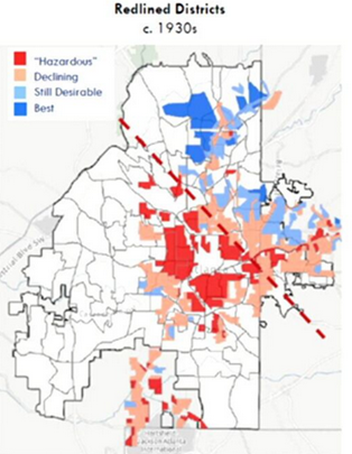
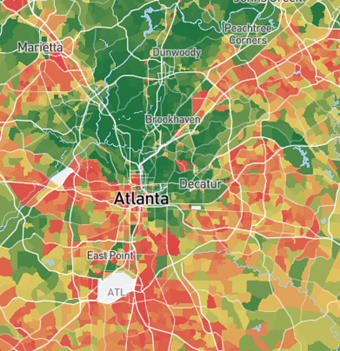
As this continues, population and job growth reinforce the region’s existing structure, including the long-standing economic and racial divide that broadly tracks north and south of I-20.

Below: Today’s Per Capita Income map is just one example of spatial segregation that has been in place for over a century.

Current Per Capita Income

Growth Happens: Follow the Money

Population growth creates real estate demand. Where that demand turns into real estate development is a separate question.

For growth to translate into real estate development, four conditions have to align:

  • “End-user” prices that support the cost of construction
  • Financing that lenders are willing to underwrite
  • A tax base that can support infrastructure and public participation
  • A delivery process that does not introduce excessive risk

In some parts of the region, those conditions align consistently. In others, they do not.

That is the dividing line.

The ARC data shows growth across both the core and the suburban edge.

Where the four conditions align, growth converts into new modern real estate development. Where they do not, it is much harder to do so.

Over time, that difference compounds.

Acting on the Data. Disrupting Historic Growth Patterns.

If growth follows the places where projects are easiest to deliver, then changing that pattern to fix a segregated region requires intentional action.

First, improving the economics of development.

Public economic development tools, including Tax Allocation Districts (TAD) and others, can help close the gap between what the market supports and what a project requires. In places like Clayton County, for example, the question is whether these tools can be used in targeted ways and deliver projects in markets that have historically been overlooked.

Second, expanding what can be built.

In much of metro Atlanta, zoning limits the range of housing that is allowed. Only a small share of land permits residential and commercial uses together, and multifamily housing remains restricted across most residential areas.

The ongoing zoning rewrite in the City of Atlanta raises a question: will it allow enough density, in enough places, to attract and support meaningful growth? And what about in the rest of the region?

Third, reducing uncertainty.

Public infrastructure, amenities, and predictable entitlement approvals lower risk for private real estate development. In areas that have seen less investment, the issue is, what CAN be done to attract new investment, given surrounding conditions?

That raises related questions for underserved areas that are not attracting their fair share of growth: will public investment be sufficient to attract private development into areas that have not historically captured it? Can philanthropy play a role?

The Choice

The region is growing. But growth alone does not change outcomes.

If existing development patterns continue, growth will reinforce the divide between north and south in the Atlanta region.

If a different result is desired, it will require intentional effort to change the conditions that determine where and how development occurs.

If this perspective resonates, and you are thinking about how your community adapts to these 21st-century realities, I am always open to a conversation.

We’re here for the work.
 

Geoff Koski
President & Owner
KB Advisory Group
geoff@kbagroup.com
www.kbagroup.com