


27 Mar One Georgia: Secure & Connected – Takeaways from the GPA Spring 2026 Conference
Intentionality is Key.
If we as planners want to design and implement projects that enhance communities and strengthen social connections, then there needs to be intentionality both during the engagement in the planning and design process as well as once the plan is created.
 Michael Sena (HKS), Jen Price (Sycamore Consulting), and Delilah Wynn-Brown (HJ Russell & Company) stressed the importance of being intentional with public input during the planning process. Their presentation showcased different projects that were the most successful because the proper time and intention was taken to curate the public input process to what fit the existing social framework of the community. A recurring tactic used across all the examples was meeting with key partners early on in the process to draft the community engagement plan together so that a spectrum of voices could be heard and integrated. The conversation also highlighted how, unfortunately, public and stakeholder engagement is often one of the first items cut or reduced from planning project budgets, despite it being an aspect that can make or break the effectiveness of the project during implementation.
 Another session, moderated by Elena Oertel from Inspire Placemaking, centered on intentionality during implementation. The panel included local community builders Julie Pierre (Biltmore Innovation District), Abbey Griffith (Clarity Fitness), Emma Marie (All the Tropes), and Erik Bredfeldt (Inspire Placemaking).
The discussion showcased how there are interdisciplinary lessons to be learned from both property managers and retailers. It is important to take the time to see how the community interacts (or doesn’t) with spaces before thinking of ways to intervene and adapt. Placemaking is not guaranteed and has to be curated, just because it is part of the design does not mean the community will come and be connected. Every space and community is different, so it is not always going to be effective to implement “cookie-cutter” designs in hopes of having placemaking within a project. The panel also highlighted how community building should also include those who are outside the traditional planning realm. Obstacles will always remain reaching the entire community (including those who are primarily online), so it also important for community building to be intentional and attractive for people to want to participate.
thinking proactively, not reactively.
Beyond re-examining our planning frameworks and making sure we are being intentional throughout the process, nothing is more critical than being proactive. This was exemplified on multiple fronts during the conference.
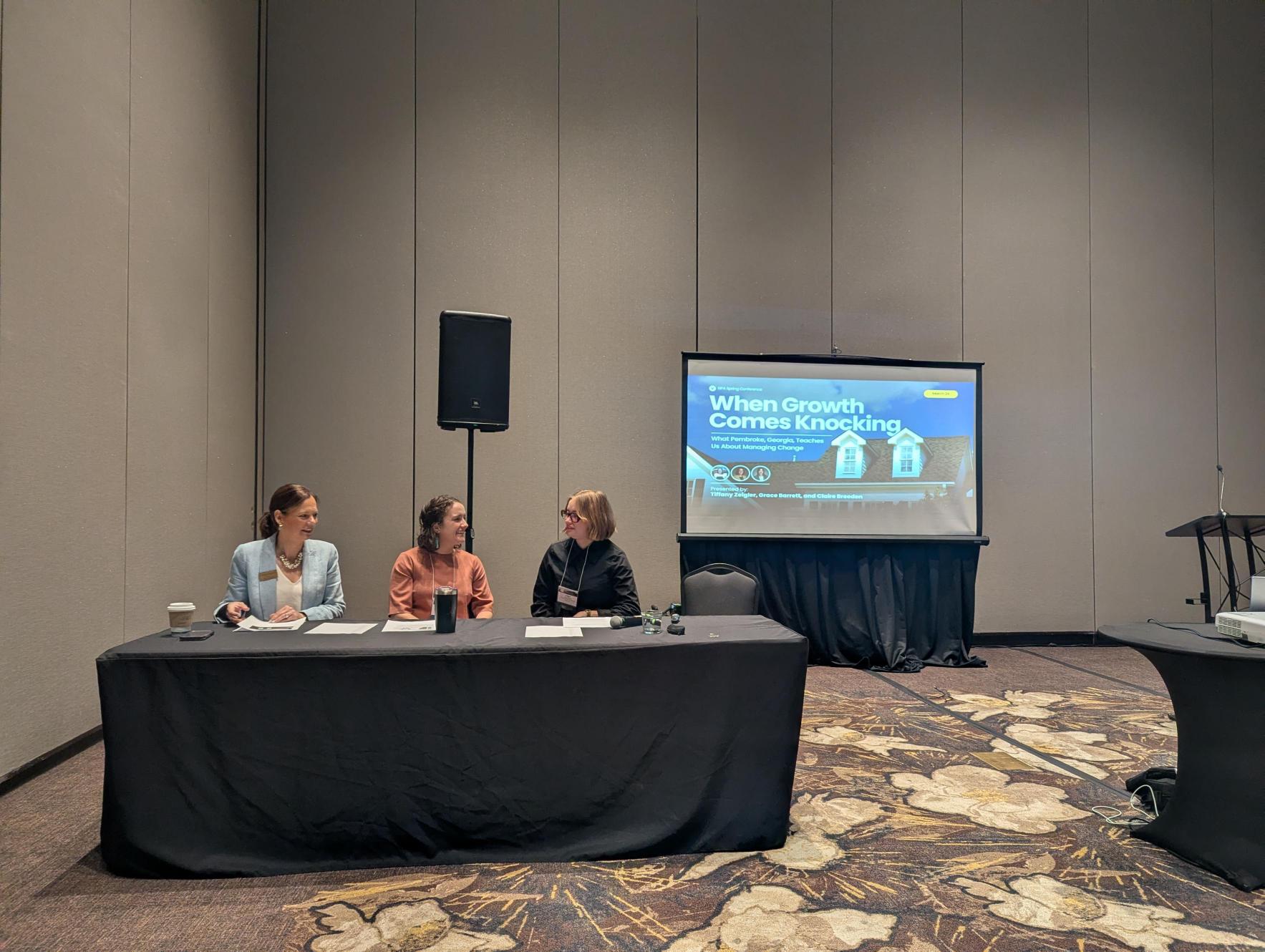 Aptly titled “When Growth Comes Knocking”, Claire Breeden and Grace Barrett from Georgia Tech’s Center for Economic Development Research (CEDR) and Mayor Tiffany Zeigler from the City of Pembroke, led a session that explored how Pembroke (2023 pop. of 2,628) responded to the sudden pressures from the announced Hyundai Metaplant nearby. With the anticipation of bringing in over 10,000 new employees to the area, the city had to think critically about how to plan for the further heightened housing needs that would emerge.
The city reached out to CEDR to assist them with navigating these pressures and determining what their best strategies would be. Through this process, the City and CEDR team leveraged data to inform the community of the potential impacts of this significant economic development project and built trust to design a shared vision on how the city can adapt. This partnership also led to the creation of CEDR’s Economic Development Ready Community Certificate (CEDR-C) which recognizes communities that demonstrate strategic readiness for economic growth through planning, workforce development, and infrastructure. Pembroke took action on the recommendations from the work with CEDR including updating their code, adding targeted density bonuses in agreed upon areas, incorporating impact fees on new development, and utilizing Planned Unit Development (PUD) zoning.


Downtown Duluth
Downtown Suwanee

Downtown Sugar Hill