The theme of this year’s conference, part of the educational arm of the Council for Quality Growth (Quality Growth Institute), was “The AI Era of the Built Environment is Here”. With former Executive Director of the Atlanta Regional Commission, Doug Hooker, serving as master of ceremonies, attendees spent the morning hearing from panelists about how both the public and private sectors of the development industry utilize AI as well as the interplay between communities and AI’s physical footprint via data centers.
Private Sector
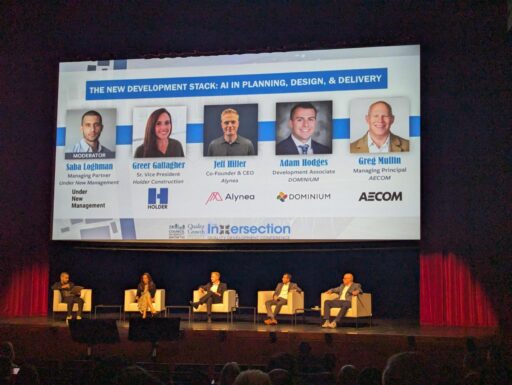
Moderated by Saba Loghman of Under New Management, a panel titled “The New Development Stack” featured leaders from Holder Construction, Alynea, Dominium, and AECOM to discuss AI best practices and applications that the private-side of the industry has incorporated to improve internal efficiencies and delivery. The panelists outlined how AI can be used to assist with administrative tasks such as documenting internal products, searching through multiple contracts and legal documents, and business development. There was also consensus across all the panelists that AI is a tool only and the quality of its outputs and ability to generate efficiencies are contingent on the thought, detail, and quality of the prompts and inputs. Additionally, that there is the ethical and professional responsibility for final review and assessment to always lie with team members and management.
Public Sector
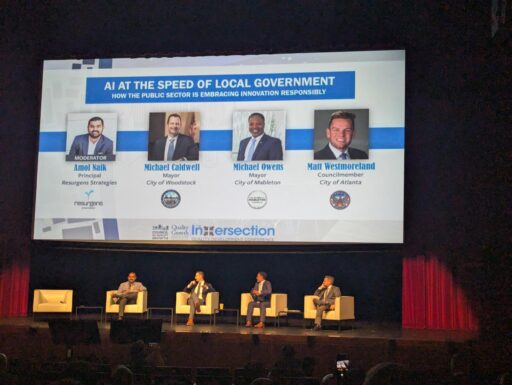
Moderated by Amol Naik with Resurgens Strategies, the following panel centered on how local government is embracing the use of AI. The panel conversation with the Mayor’s of both the City of Woodstock and City of Mableton as well as Councilmember Westmoreland from the City of Atlanta similarly highlighted AI as a tool but also emphasized the importance of responsible use. Communities don’t have R&D divisions in the way that the private sectors does and each have different regulations, so experimenting with integrating AI has to follow a different process. The panelists all agreed that leading with policy is the best practice, even if the experimentation is a decentralized effort. They all also highlighted that process is the most important determinant in successful execution. AI alone cannot fix a broken process.
Built Environment
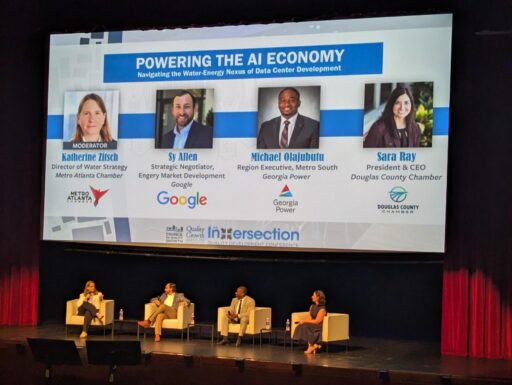
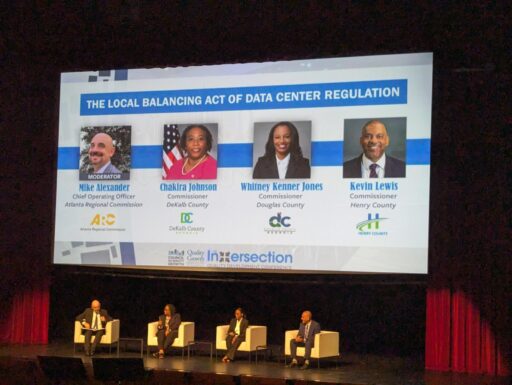
The second half of the conference shifted the conversation to the physical infrastructure behind AI. This portion of the program included a panel moderated by Katherine Zitsch from the Metro Atlanta Chamber and panelists from Google, Georgia Power, and the Douglas County Chamber focused on the importance of communication, transparency, and understanding net benefits of data centers when pursuing these projects. The conference ended on a session on data center regulations. Moderated by Mike Alexander from the Atlanta Regional Commission, this closing panel included elected leadership from DeKalb, Douglas, and Henry Counties. Based on their experience, the panelists emphasized the importance of having those with technical knowledge of the delivery and operational process of data centers involved in policy creation as well as balancing specificity with control. Examples of requirements that could be part of these regulations include: external look and feel that aligns with the surrounding area’s character, alignment with prior plans, site restoration provisions for decommissioning, allocation for undisturbed green space, and buffers with other uses – especially residential.